What Google decided, and what changed first.
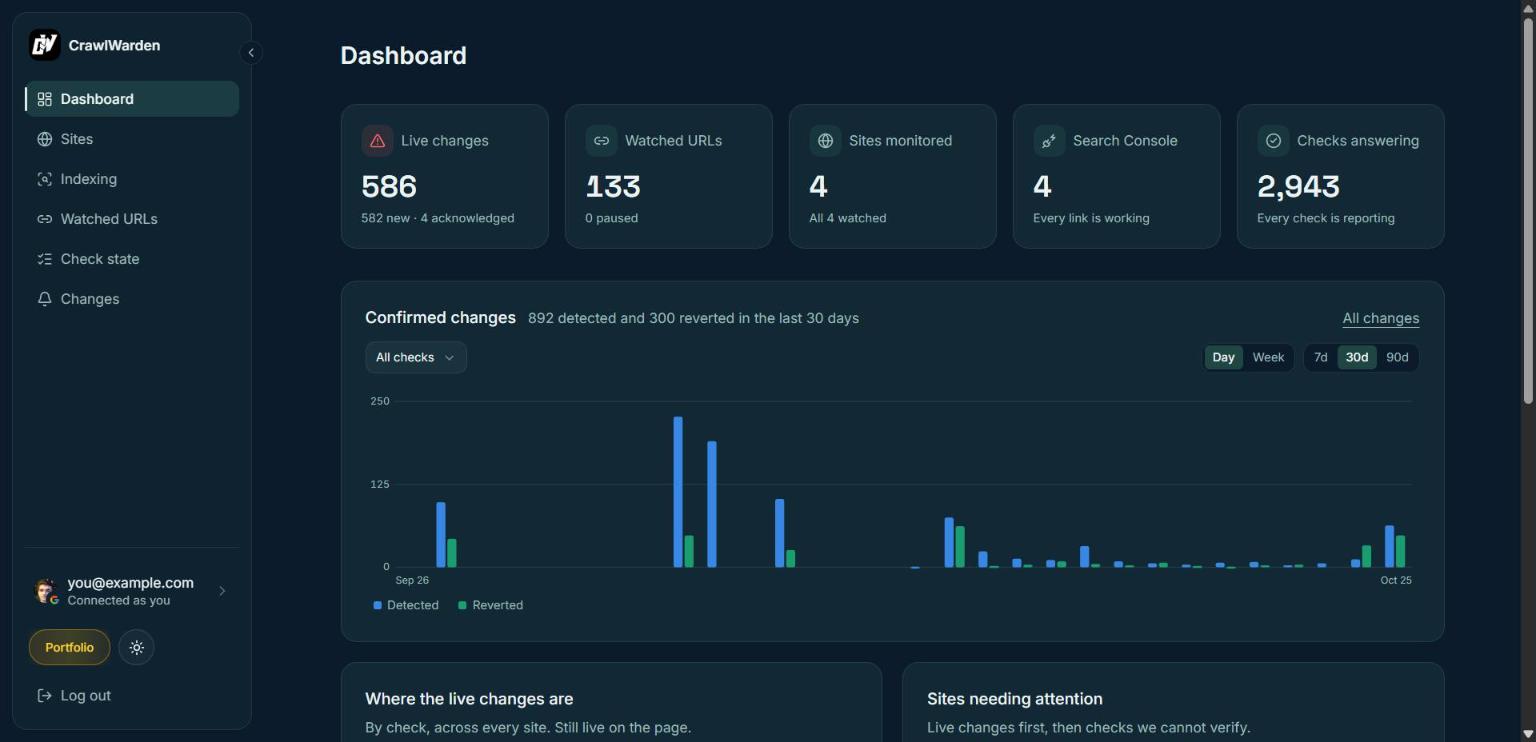
CrawlWarden reads your Search Console, read only, and tells you when Google's verdict or numbers for a page you watch change. Each alert carries what CrawlWarden recorded changing on that page beforehand.
Google's clicks for /pricing fell below their normal range from Friday 3 October. Before that, CrawlWarden recorded: on Tuesday 30 September the page's canonical changed to /pricing-new.
No card, no trial clock. Real checks on the free plan.
Answers per crawler, not one guess for all
Google's outcome, with the evidence attached
Two sources, dated facts from both, and no guess at a cause. That is the whole product, and it is why the alerts get read.
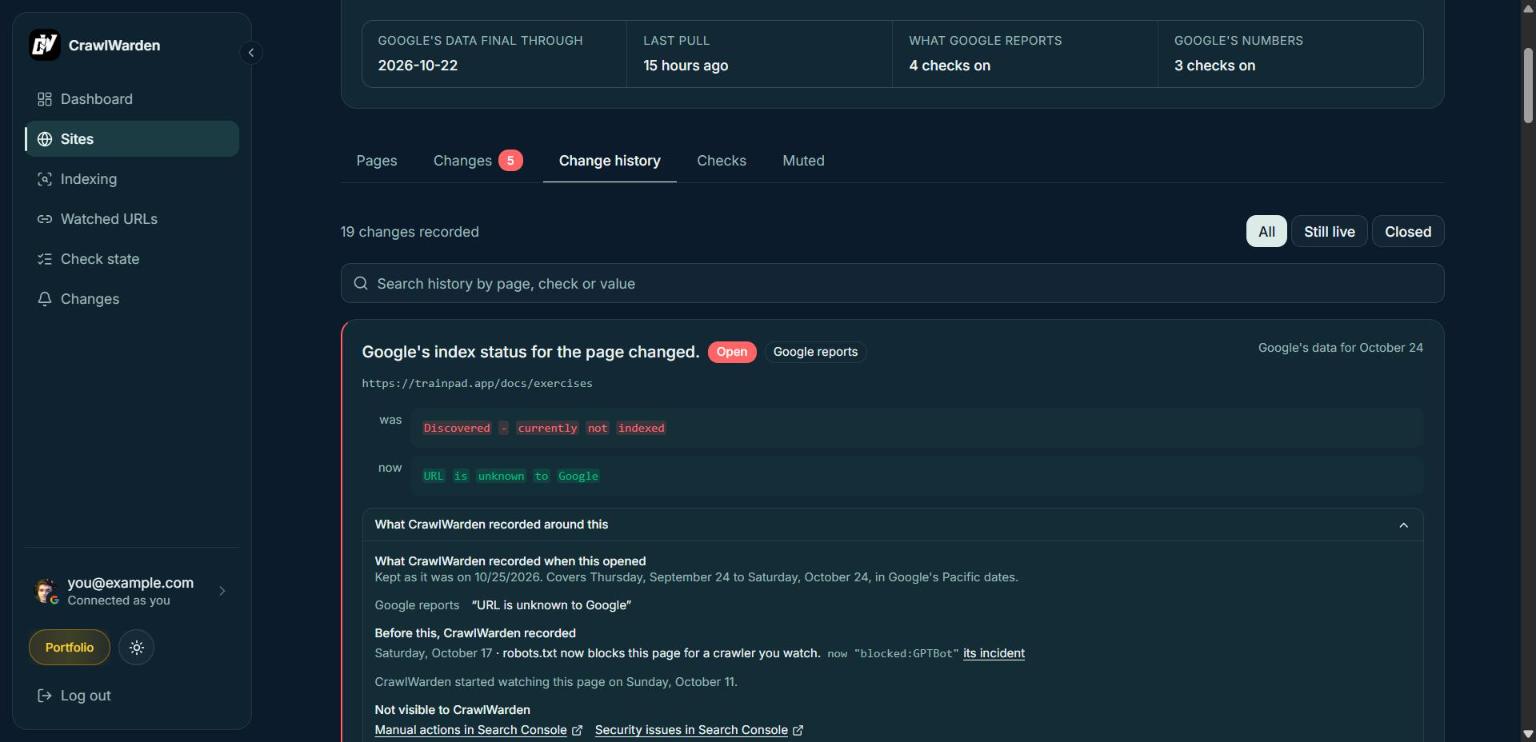
It tells you what Google decided, and what changed first
Read your Search Console, read only. When Google's verdict or numbers for a watched page move, the alert says so in Google's own dates and lists what changed on that page beforehand. Search Console shows the outcome days later and nothing about what preceded it.
It remembers
Full change history on every plan, from the day a page was added. It is also what makes the first claim possible: nobody can list what changed before an outcome unless they were already watching.
It sees what Googlebot sees
Every page is fetched a second time as Googlebot from a non-US address. Geo and bot blocking that looks perfect in your browser gets caught.
One observation is noise. Two is a fact.
A change must be seen at least twice before it alerts. A flickering deploy or a one-off blip never wakes you up.
You are never rationed
Priced per site, not per URL. Every check on every plan, and Google's alerts are identical on free.
The Google half is published in full: the six things Google reports about a page, the numbers and how late they arrive, and the whole method behind the drop alerts, including the floor of roughly 30 clicks a day below which they stay silent.
Sixty seconds to your first check
Connect, add, confirm. Then silence until something actually changes.
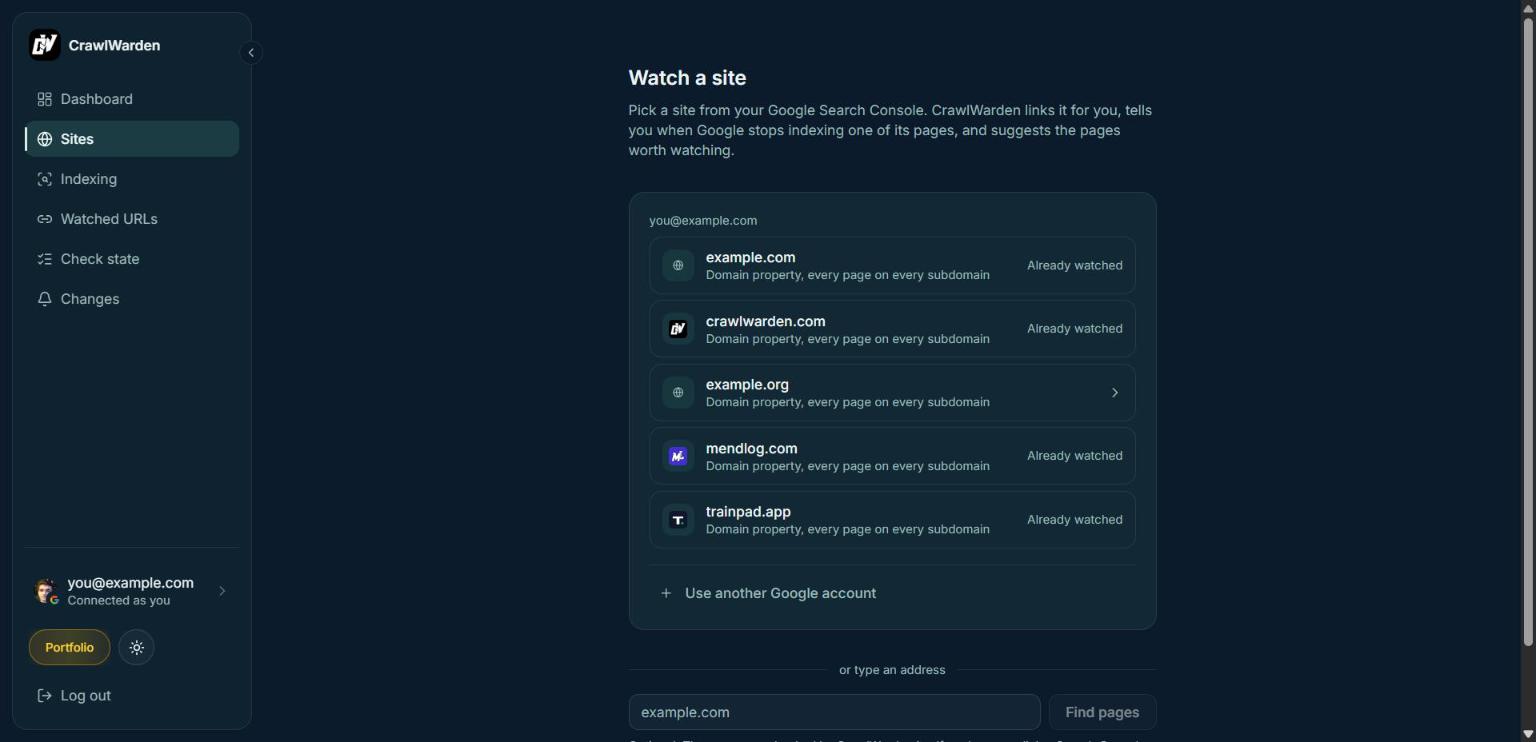
Connect Search Console, then add a site
Link Search Console first, read only, because what Google decided is the thing you came for. Then give it a domain: it reads the sitemap and pre-selects the pages worth watching. No access to the property? Page monitoring runs and alerts without it.
It watches, quietly
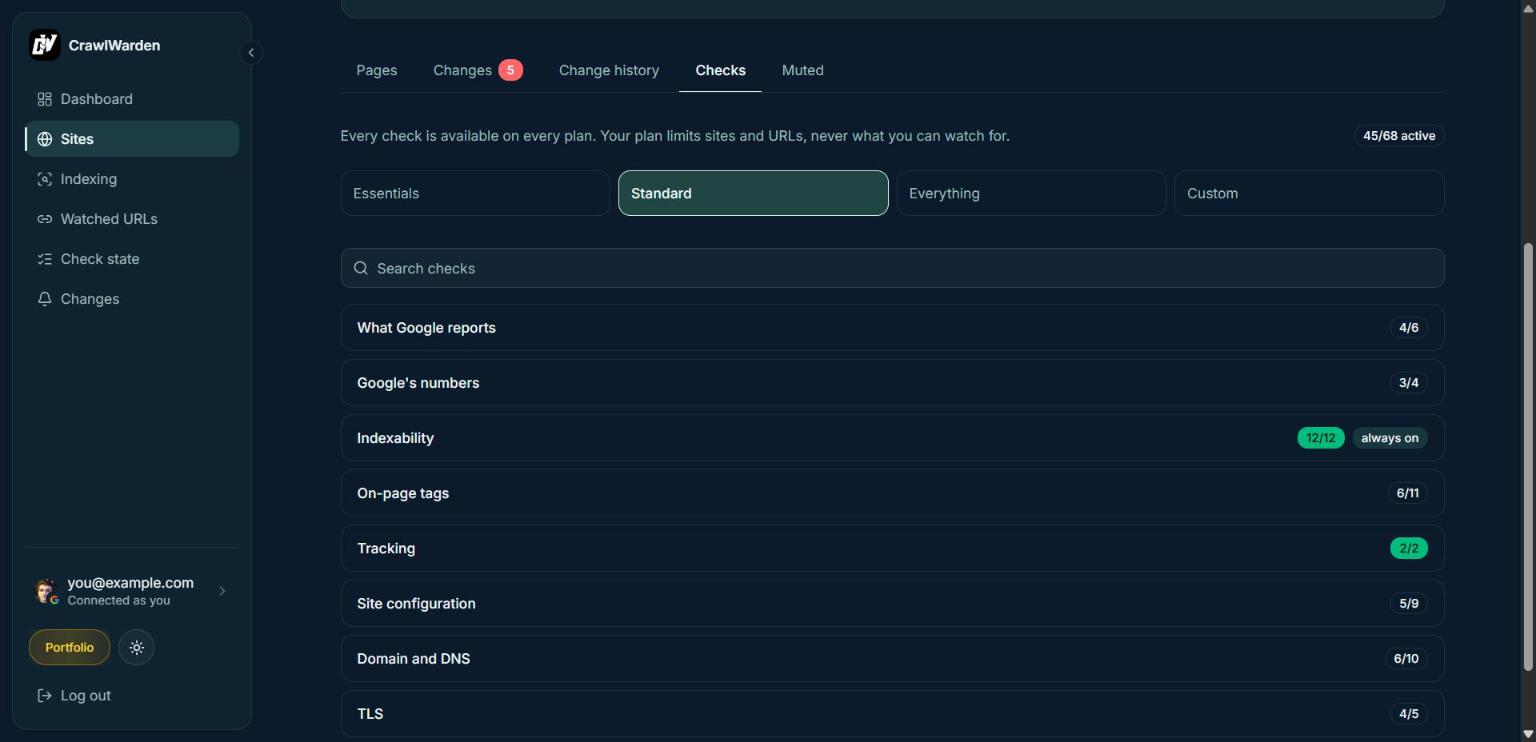
Every few hours it records the values that decide indexability, and once a day it reads what Google now says about those same pages. A change is confirmed twice before it counts.
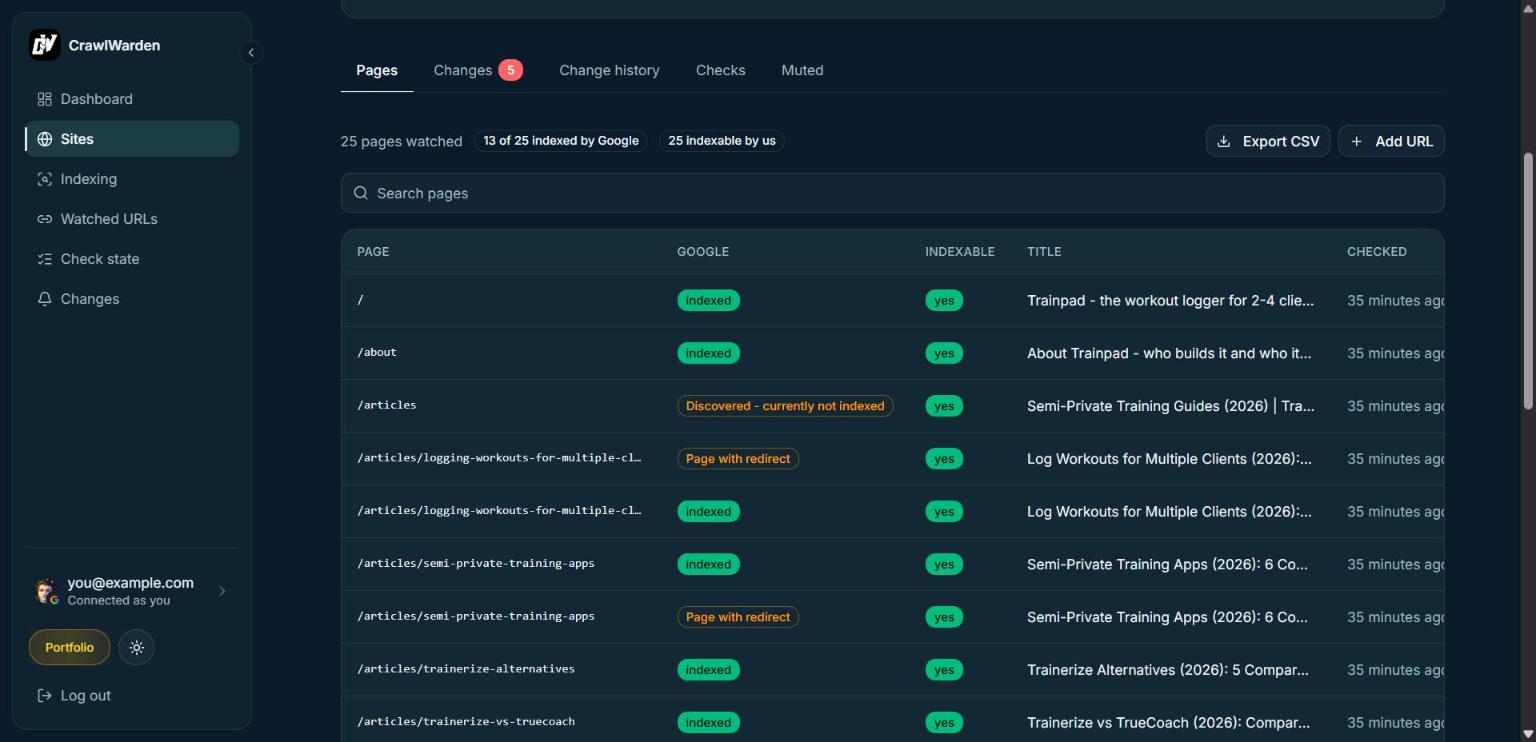
You get one email
What Google now reports, since when, in Google's own dates, and under it what CrawlWarden recorded changing on that page first. Nothing when nothing changed.
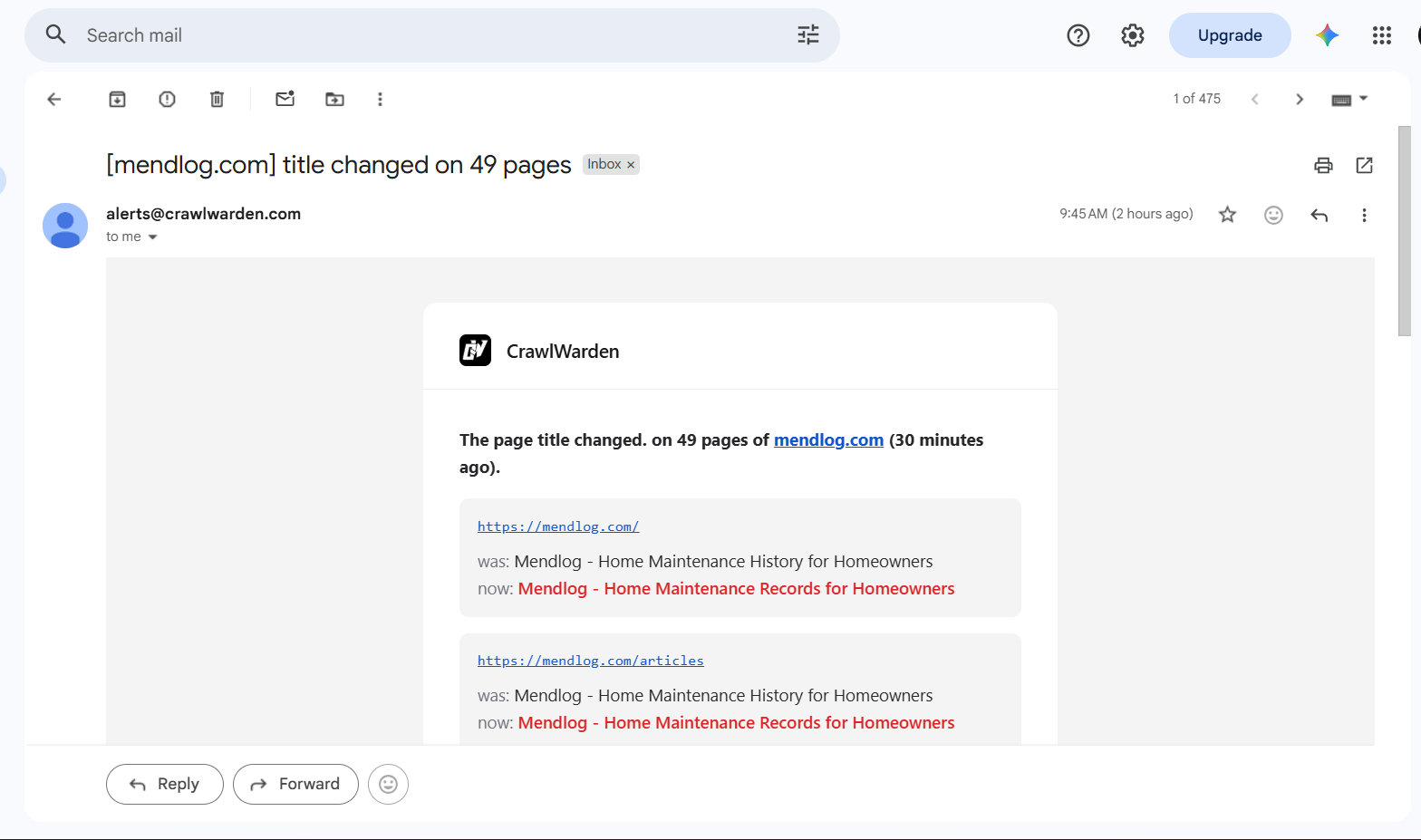
Every few hours, it records
68 checks across indexability, on-page tags, analytics, configuration, DNS, TLS and content integrity. You choose which ones - the plan never chooses for you. Every check, and what a change in it means.
We measured how often the Googlebot check has something to find: of 105 public domains fetched twice, 5.1 percent of those healthy to a browser answered a Googlebot user agent differently. The method, the four domains and the limits.
What each of these failures actually costs
One page per failure mode, answering the question first: what it is, how it gets onto a live site, how to verify it yourself, and which check reports it.
Watch a site in sixty seconds
Give it a domain, keep the pages it suggests, and the first check runs immediately. Free forever for one site.